

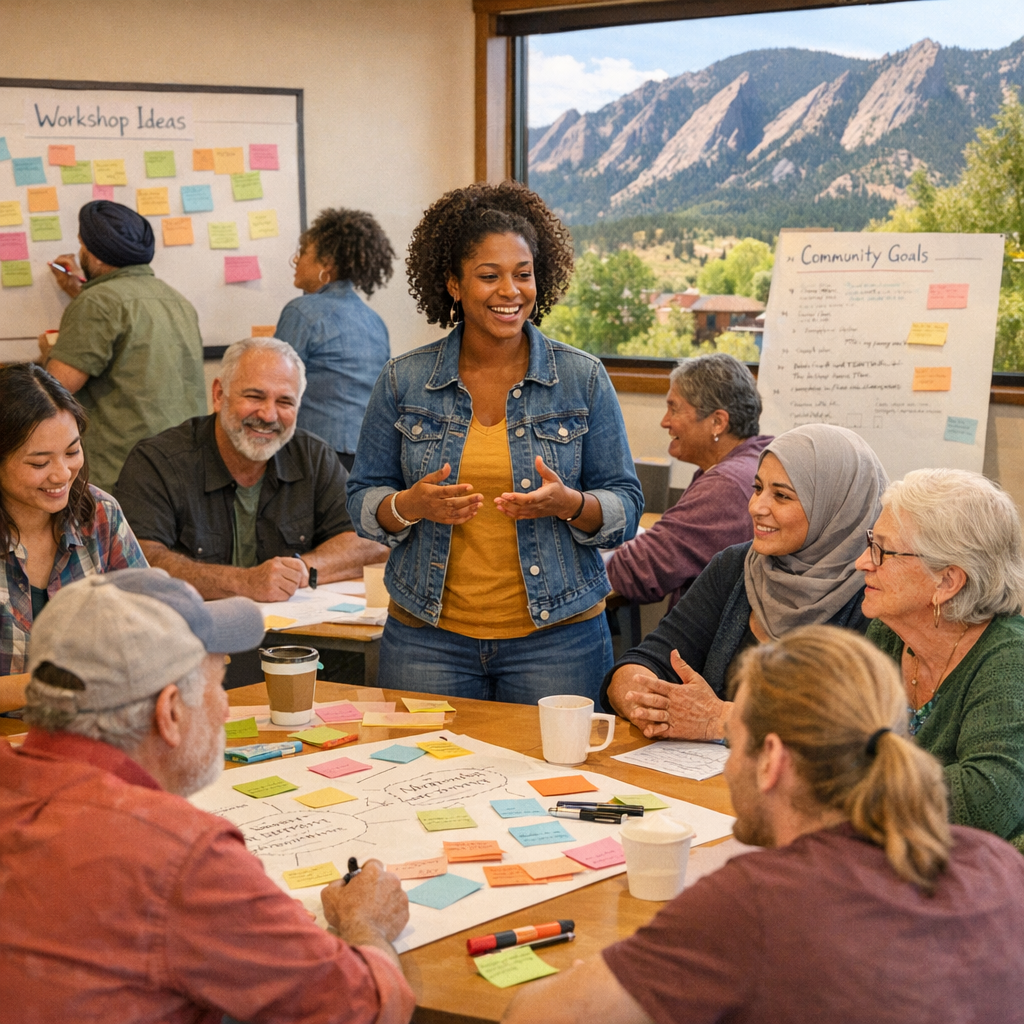
Boulder has long been recognized for its commitment to fostering a vibrant and inclusive community. Central to this commitment are various initiatives aimed at amplifying diverse voices and ensuring that all residents have opportunities to participate in shaping the city’s future.
Community Connectors Program
The City of Boulder’s Community Connectors Program plays a pivotal role in bridging the gap between underrepresented communities and local government. By engaging individuals from diverse backgrounds, the program facilitates two-way dialogue, shares resources, and surfaces community concerns. Community Connectors receive stipends for their dedication, acknowledging the value of their time and expertise. Active projects include the Downtown Places initiative and the development of the NoBo Library and Park on Violet Avenue, both emphasizing collaborative design and community involvement. Learn more about the Community Connectors Program.
Growing Up Boulder
Another noteworthy initiative is Growing Up Boulder, a child and youth-friendly city initiative that began in 2009. This program empowers young people by providing them with opportunities to influence local issues affecting their lives. By collaborating with local nonprofits, businesses, and educational institutions, Growing Up Boulder ensures that the perspectives of children and youth are integrated into city planning and decision-making processes. Discover more about Growing Up Boulder.
SLICE: Service Learning & Impact in Community Engagement
The University of Colorado Boulder’s SLICE program connects students with opportunities to create positive change both on campus and in the broader Boulder community. By encouraging awareness of local needs and various perspectives, SLICE supports students in becoming socially responsible leaders who listen, take action, and help build a better world. Explore SLICE opportunities.
Community-Led Design of Resilient Infrastructure
In collaboration with the San Lazaro mobile home community, CU Boulder’s Center for Community-Engaged Design and Research (CEDaR) facilitates a community-driven design process to develop sustainable and resilient micro-infrastructure. This project benefits residents while providing students with firsthand experience in participatory design processes that redistribute power to communities. Read about the Community-Led Design of Resilient Infrastructure.
These initiatives exemplify Boulder’s dedication to inclusive community engagement. By actively involving residents from all walks of life, the city not only strengthens its social fabric but also ensures that its development reflects the diverse needs and aspirations of its people.