

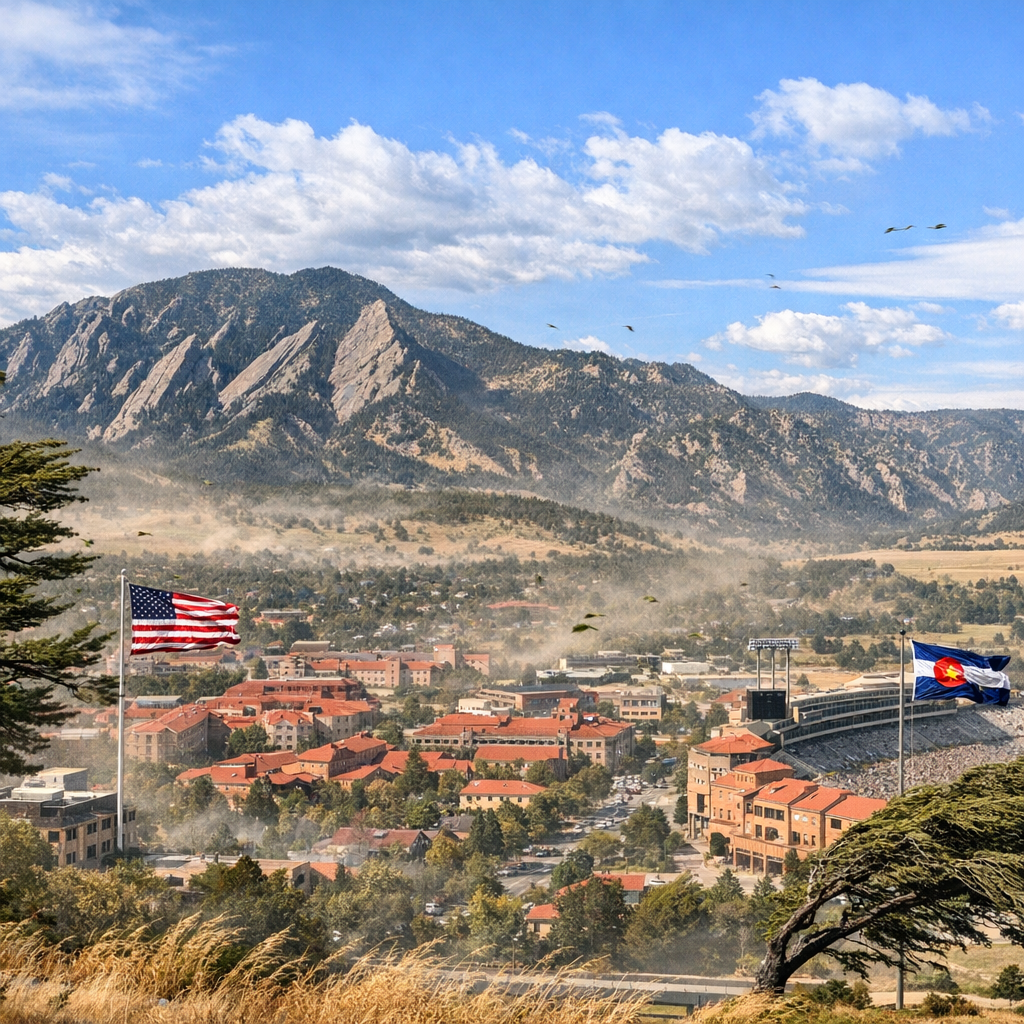
Boulder, Colorado, is renowned not only for its picturesque landscapes but also for its notably strong and persistent winds. These winds are a result of the city’s unique geographical and meteorological conditions.
Geographical Influences
Situated at the foothills of the Rocky Mountains, Boulder experiences significant wind activity due to the interaction between mountain airflows and the plains. As winds descend from the mountains, they accelerate, leading to the strong gusts commonly felt in the area.
Chinook Winds
One prominent wind phenomenon in Boulder is the Chinook wind. These are warm, dry winds that occur when moist air rises over the mountains, loses moisture, and then descends rapidly on the leeward side, warming as it compresses. Chinook winds can lead to rapid temperature increases and are often associated with sudden snowmelt.
Impacts on the Community
The strong winds in Boulder have several implications:
- Structural Damage: High wind speeds can cause damage to buildings, power lines, and trees.
- Fire Risk: Dry, windy conditions can elevate the risk of wildfires, as seen in recent years.
- Recreational Considerations: Outdoor activities, especially those involving lightweight equipment, can be affected by sudden gusts.
Understanding these wind patterns is crucial for residents and visitors to prepare and adapt to Boulder’s dynamic environment.